Introduction
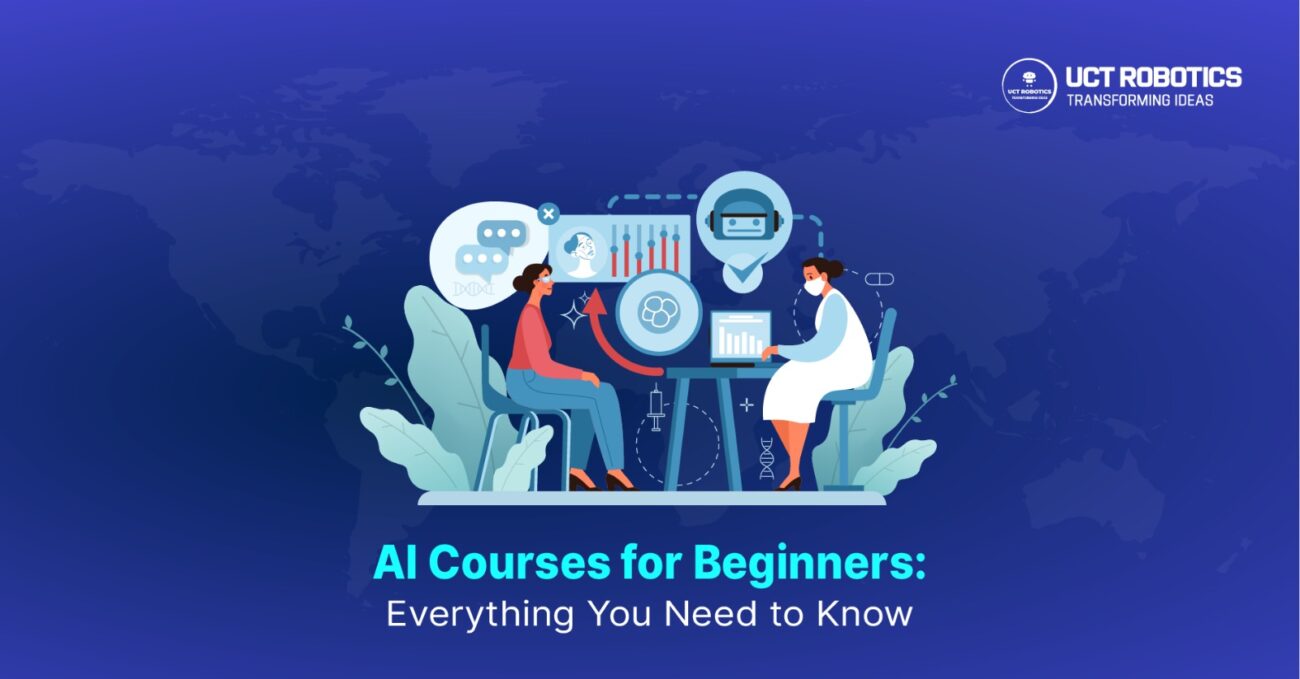
Artificial Intelligence (AI) is changing the world around us, from smart home devices to advanced robotics. If you’re new to AI and want to learn from scratch, this guide is just for you. Whether you’re interested in beginner AI programmes or entry-level AI training, this blog will help you understand everything about learning AI easily and clearly. Plus, if you’re into robotics like those working with UCT Robotics products, you’ll find special tips to connect AI learning with your hardware skills.
What is Artificial Intelligence?
AI is the science of teaching computers to think and make decisions like humans. It involves machines recognizing patterns, learning from data, and solving problems automatically. You don’t have to be a tech expert to start; AI is about understanding simple ideas such as machine learning and smart algorithms, which are used in many industries, including robotics and IoT.
Who Should Take AI Courses for Beginners?
- Absolute beginners: Those with no tech background at all.
- Robotics enthusiasts: Especially users of embedded systems and IoT devices like UCT Robotics customers.
- Career switchers: People looking to gain new skills to enter AI or robotics fields.
- Students and professionals: Wanting practical, hands-on knowledge for real-world applications.
Types of AI Courses for Beginners
There are mainly three kinds of beginner-friendly AI courses:
- Non-technical courses: Focus on AI ideas and benefits, no coding required.
- Technical beginner AI programmes: Learn Python, data basics, and machine learning fundamentals.
- Project-based courses: Practice with hands-on AI projects, especially helpful for robotics and IoT applications.
Table: Beginner AI Course Types and Robotics Relevance
| Course Type | Robotics Focus | Suitable For | Example Topics |
| Non-technical | Awareness | New learners | AI basics, ethics, impacts |
| Technical | Essential | Programmers | Python, ML algorithms |
| Hands-on projects | High | Robotics/IoT users | Sensor data, automation |
Popular Platforms for Beginner AI Courses
Many trusted platforms offer beginner AI courses. Here are some top choices:
| Platform | Highlights | Example Course |
| Coursera | Instructor-led, certifications | AI for Everyone by Andrew Ng |
| Google Cloud | Cloud AI tools and training | AI and Machine Learning Essentials |
| DataCamp | Coding-focused, hands-on | Intro to AI with Python |
What to Expect from Entry-Level AI Courses
- Topics covered: Basics of machine learning, Python programming, ethical AI, deep learning, and AI for robotics.
- Course duration: Usually 4-10 weeks with video lessons, quizzes, and coding labs.
- Outcome: Gain certificates or skill badges to validate your knowledge.
- Learning style: Mix of theory and practical assignments ensuring understanding.
How to Learn Artificial Intelligence from Scratch
- Master basic math: Linear algebra and probability are important for AI models.
- Learn Python: Most AI work is done using Python programming. Start simple, then move to AI libraries like TensorFlow or PyTorch.
- Understand AI concepts: Dive into machine learning types, neural networks, and data preprocessing.
- Practice with projects: Work on example projects involving sensors, robotics hardware, and automation.
- Study AI ethics: Learn why responsible AI development matters.
Tips for Choosing the Right AI Course for Beginners
- Assess your current knowledge and goals before picking a course.
- Find courses with hands-on projects for stronger learning.
- Pick training that includes robotics or IoT applications if that’s your interest.
- Check if certification is important for your career path.
Additional Resources and Communities for Beginners
- Join forums like AI Stack Exchange or robotics groups for help.
- Supplement your learning with free YouTube tutorials, blogs, and newsletters.
- Stay updated with latest AI trends by following AI news sites.
AI Courses for Beginners Tailored to Robotics Enthusiasts (UCT Robotics Audience)
If you’re using robotics and connectivity products from UCT Robotics, learning AI opens exciting opportunities. AI helps make your devices smarter by analyzing sensor data, automating tasks, and improving control systems. Look for beginner AI programmes that teach these practical skills along with Python coding, so you can build your own smart IoT and robotic applications easily.
Conclusion
Starting your AI journey is easier than ever with beginner-friendly courses that simplify complex ideas. By choosing the right pathway and focusing on robotics applications, you’ll gain valuable skills that can drive innovation and career growth. Don’t wait—explore AI courses for beginners today and take your robotics knowledge to the next level!