Introduction
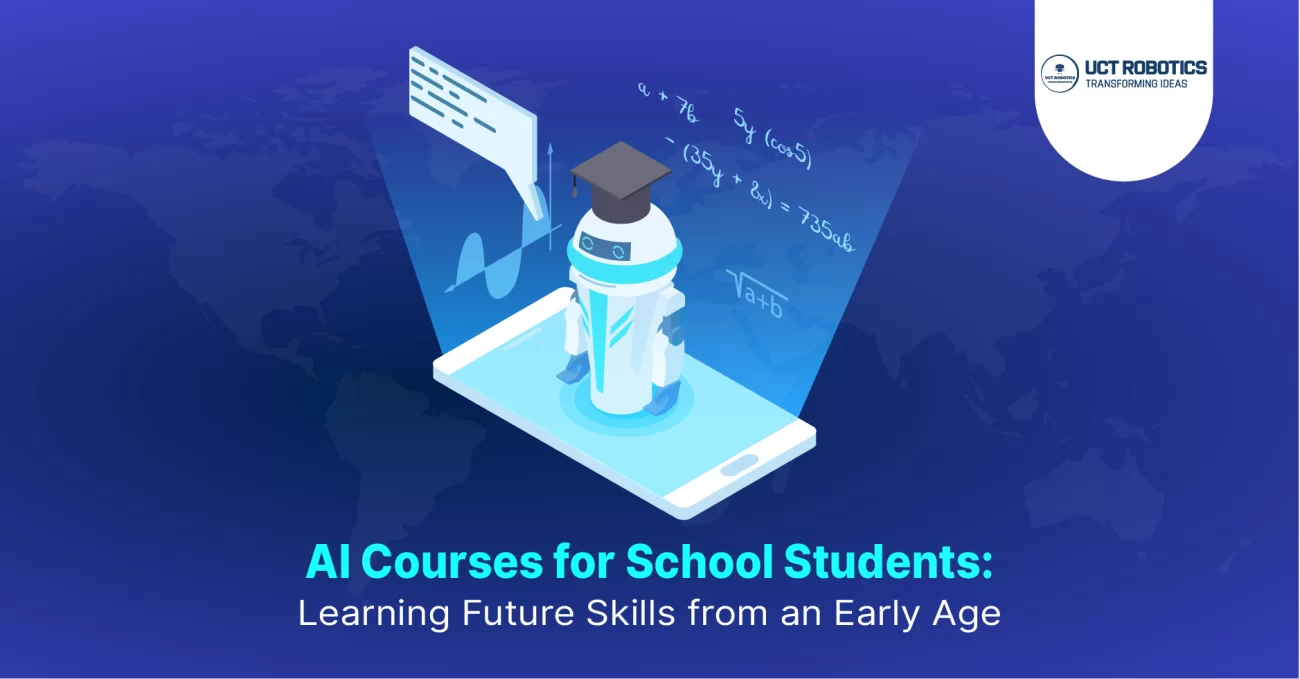
Artificial Intelligence (AI) is no longer just a futuristic concept—it’s already transforming the world around us. From voice assistants like Siri and Alexa to self-driving cars and personalized recommendations, AI shapes our daily lives. Imagine if school students could not only understand AI but also create AI-powered projects from an early age! AI courses for school students are becoming essential in preparing young minds for a future that will rely heavily on technology and innovation.
This blog explores why AI education is vital for school students, what current AI courses offer, and how hands-on learning, teacher training, and inclusivity can bridge the gaps to make AI education effective and accessible for all.
Why AI Education for School Students Matters
AI is rapidly changing the job landscape and the way we solve problems. Introducing AI courses at the school level gives students a head start in developing critical 21st-century skills such as:
- Critical thinking and problem-solving: Understanding how AI algorithms work helps students analyze data, identify patterns, and develop logical solutions.
- Creativity and innovation: AI projects let students design intelligent apps, games, and chatbots that ignite imagination.
- Digital literacy: Early exposure to AI fosters comfort with technology, preparing students for advanced STEM education and future careers.
With India’s Ministry of Education planning to include AI starting as early as Class 3 in the 2026-27 academic year, the move reflects a global recognition of AI’s importance in education.
Current Landscape of AI Courses for School Students
Many schools and platforms now offer AI courses tailored to different grades. For example, Codingal provides STEM.org-accredited AI courses for grades 3 to 12 that include:
- Teaching fundamental AI concepts like natural language processing, computer vision, and machine learning.
- Hands-on projects such as building chatbots, AI-powered games, and image recognition tools.
- Live one-on-one interactive sessions with expert instructors.
- Certification after completing the course, adding value to the student’s learning portfolio.
Currently, over 18,000 schools under the CBSE framework already include AI as a skill subject from Class 6 upwards, and this is expanding to younger students.
Features and Benefits of AI Learning for Kids
| Feature | Benefit | Example Projects |
| Block-based coding | Easy for beginners to grasp AI concepts visually | AI chatbots, sentiment analysis in Scratch |
| Hands-on Projects | Applying concepts enhances understanding and retention | Face detection game, translator app |
| STEM Integration | Enhances knowledge across science, tech, engineering, and math | Healthcare AI simulations, robotics projects |
| Interactive Learning | Fun and engaging way to spark curiosity | AI-powered art and music creation |
| Certificates | Formal recognition motivating continued learning | STEM.org AI Genius certificate |
These courses present AI as accessible and fun, even for young learners, building a strong foundation for complex AI concepts later on.
Bridging Content Gaps in AI Education for Students
Despite the rise of AI courses, there are key gaps that limit their full potential. Addressing these gaps will greatly enhance the impact of AI learning:
- Emphasis on Hands-on Learning: Many curricula are still too theory-focused. Students learn best through active projects where they can build AI models and applications themselves.
- Teacher Training: Teachers need proper preparation to confidently teach AI. Schools must invest in continuous teacher development to keep pace with evolving AI topics.
- Inclusivity and Diversity: AI education should be accessible to all, regardless of gender or socio-economic background. Programs must promote diversity and culturally responsive content.
- Ethical AI Awareness: Early lessons on AI ethics, fairness, and privacy are often missing but critical to creating responsible future innovators.
- Balanced AI Use: Overdependence on AI tools can hamper creativity and critical thinking. AI should complement, not replace, human skills.
- Student Engagement: Interactive and varied teaching methods increase motivation and learning retention.
- Access and Equity: Affordable AI labs and online resources are necessary to democratize AI education globally.
By integrating these elements, educators and policymakers can ensure AI learning truly prepares students for the challenges ahead.
AI Labs for Students: Bringing AI to Life
AI labs provide a physical or virtual space where students experiment with robotics, coding, and AI models. These labs allow for:
- Hands-on experiences like programming robots to perform tasks.
- Collaborative projects that foster teamwork and creativity.
- Real-time feedback through AI tools that enhance learning.
Schools investing in AI labs offer students an immersive environment that makes AI concepts tangible and exciting.
Integrating AI with STEM Education
AI acts as a powerful extension of STEM, driving innovation and real-world applications such as:
- Smart healthcare diagnosis tools.
- Environmental monitoring with AI sensors.
- Automation in manufacturing and agriculture.
Integrating AI within STEM subjects helps students connect theory with impactful uses, making learning more relevant and engaging.
Conclusion
AI courses for school students are crucial to equip children with future-ready skills. Early AI education fosters creativity, logic, and responsible tech use, shaping a generation ready for the digital economy. Schools, parents, and educators must collaborate to expand access, improve teaching quality, and make AI education inclusive and engaging.
Start exploring AI courses today and help young learners unlock the power of Artificial Intelligence for a smarter tomorrow.