Introduction: A New Era of Learning
Imagine a classroom where students can explore the solar system, conduct chemical experiments, or dissect a virtual frog—all without leaving their desks. This is not science fiction; it’s the power of AR (Augmented Reality) and VR (Virtual Reality) technologies. In India, where STEM (Science, Technology, Engineering, and Mathematics) education faces challenges like outdated teaching methods and limited resources, AR VR labs are emerging as game-changers.
Immersive technologies like AR and VR are not just tools; they are gateways to future-ready education. By making learning interactive, engaging, and experiential, these technologies are helping Indian schools overcome traditional barriers and prepare students for the demands of the 21st century.
What Are AR VR Labs?
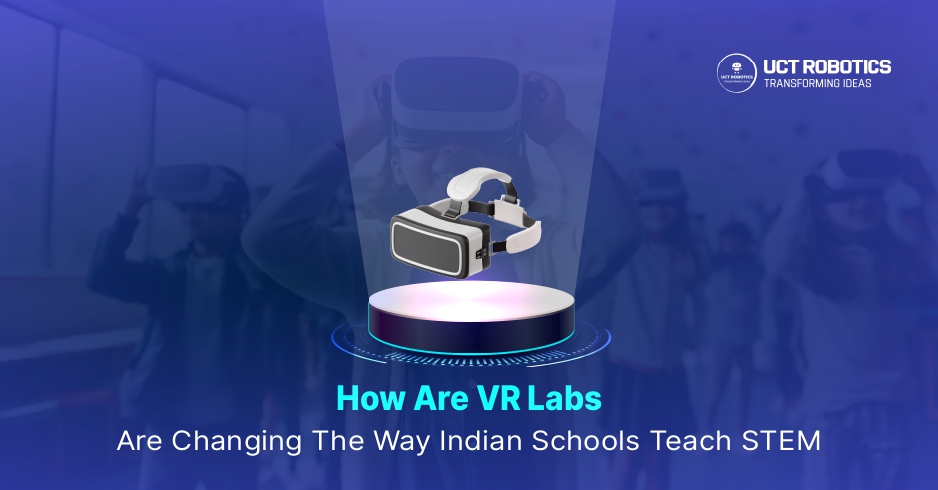
AR VR labs are specialized setups in schools that use augmented and virtual reality to create immersive learning experiences. These labs are equipped with tools like VR headsets, AR-enabled devices, and interactive software to bring STEM concepts to life.
AR vs. VR: What’s the Difference?
| Feature | Augmented Reality (AR) | Virtual Reality (VR) |
| Definition | Adds digital elements to the real world | Creates a fully immersive virtual environment |
| Example | Viewing a 3D model of the human heart on a tablet | Exploring a virtual space station using a VR headset |
| Equipment Needed | Smartphones, tablets, AR apps | VR headsets, controllers, VR software |
Examples of Immersive STEM Activities
- Physics: Simulating gravity on different planets.
- Biology: Exploring the human anatomy in 3D.
- Chemistry: Conducting virtual experiments without safety risks.
- Mathematics: Visualizing complex geometrical shapes in 3D.
Transforming STEM Education with AR VR
Making Abstract Concepts Tangible
STEM subjects often involve abstract concepts that are hard to grasp through textbooks alone. AR VR makes these concepts tangible. For instance:
- Electric Circuits: Students can build and test virtual circuits without physical components.
- Molecular Structures: Visualizing molecules in 3D helps students understand chemical bonds better.
Enhancing Engagement and Experiential Learning
Immersive technologies turn passive learning into active exploration. Students can:
- Interact with 3D models.
- Participate in virtual field trips, like visiting a volcano or the ocean floor.
- Conduct experiments in a risk-free virtual environment.
Cultural Integration through AR VR in STEM
AR VR labs can also integrate Indian heritage and culture into STEM education. For example:
- History Meets STEM: Using AR to explore ancient Indian engineering marvels like the Iron Pillar of Delhi.
- Cultural Identity: Teaching students about traditional Indian crafts and their scientific principles.
This holistic approach not only reinforces cultural identity but also makes learning more relatable and engaging.
Collaborative Learning in Virtual Environments
AR VR fosters teamwork and social learning by enabling students to collaborate in virtual spaces. Examples include:
- Group Projects: Students can work together to design a virtual city or solve a STEM challenge.
- Virtual Classrooms: Platforms like Google Expeditions allow students to explore and learn together, even if they are in different locations.
Personalized and Adaptive STEM Learning
One of the biggest advantages of AR VR is its ability to tailor learning experiences to individual needs. Features include:
- Adaptive Learning Paths: Students can progress at their own pace.
- Learning Styles: Visual learners can benefit from 3D models, while kinesthetic learners can interact with virtual objects.
This is particularly beneficial in India’s diverse classrooms, where students come from varied backgrounds and learning abilities.
Practical Steps for AR VR Lab Setup in India
Setting up an AR VR lab may seem daunting, but it can be done cost-effectively. Here’s how:
Cost-Effective Lab Models
| Equipment | Estimated Cost (INR) | Description |
| Basic VR Headsets | 5,000–10,000 | Affordable options for schools |
| AR-Enabled Tablets | 15,000–25,000 | For interactive AR experiences |
| Software Subscriptions | 10,000–20,000/year | Access to AR VR educational content |
Faculty Training Programs
Teachers need to be trained to use AR VR tools effectively. Training programs should cover:
- Basics of AR VR technology.
- Integrating AR VR into the curriculum.
- Troubleshooting common issues.
Indian AR VR Solutions Providers
Several Indian companies are offering affordable AR VR solutions for schools, such as:
- EduTech India: Specializes in AR VR content for STEM.
- Tinkerly: Provides AR VR kits and teacher training.
Accessibility, Equity, and Challenges
While AR VR labs hold immense potential, challenges remain:
- Infrastructure: Many schools lack the basic infrastructure needed for AR VR labs.
- Affordability: High costs can be a barrier for under-resourced schools.
- Teacher Readiness: Teachers may resist adopting new technologies due to lack of training.
Overcoming Barriers
- Government Initiatives: Programs like Atal Tinkering Labs are promoting STEM education in India.
- Public-Private Partnerships: Collaborations between schools and tech companies can reduce costs.
- Rural Outreach: Mobile AR VR labs can bring immersive learning to remote areas.
Early Implementations and Case Studies from India
Several Indian schools have already implemented AR VR labs with impressive results:
- Case Study 1: A school in Bengaluru reported a 30% improvement in STEM test scores after introducing AR VR labs.
- Case Study 2: A rural school in Maharashtra used AR VR to teach farming techniques, blending STEM with local needs.
Testimonials
- Student: “I never thought learning could be this fun. I feel like I’m inside the lesson!”
- Teacher: “AR VR has made it easier to explain complex topics. Students are more engaged than ever.”
Future Trends: AI and IoT in AR VR STEM Labs
The future of AR VR in STEM education is even more exciting with the integration of AI (Artificial Intelligence) and IoT (Internet of Things). Emerging trends include:
- AI-Powered Tutors: Virtual assistants that guide students through lessons.
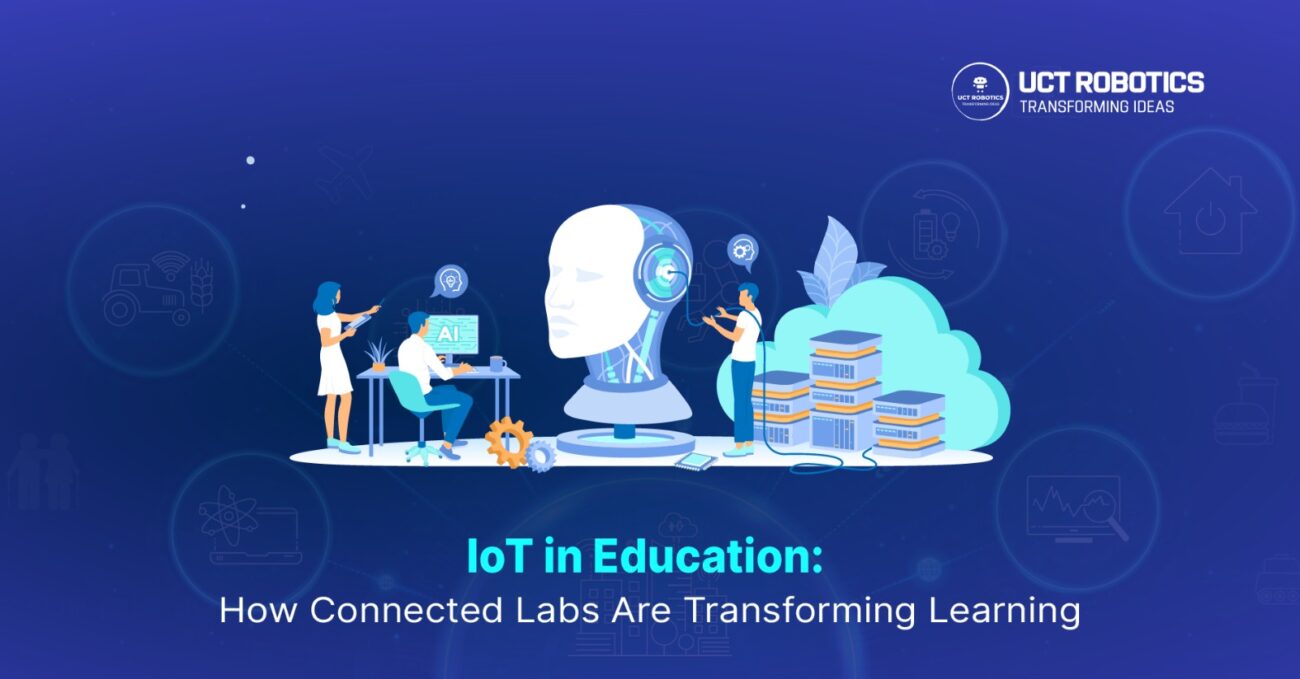
- IoT-Enabled Labs: Smart devices that interact with AR VR tools for real-time data collection.
These technologies will create intelligent, interactive, and data-driven STEM classrooms.
Conclusion: A Call to Action
AR VR labs have the potential to revolutionize STEM education in India. By making learning immersive, engaging, and personalized, they can prepare students for the future while addressing current challenges in the education system.
It’s time for stakeholders—schools, governments, and tech companies—to invest in inclusive, tech-enabled learning environments. Together, we can ensure that every student in India has access to the transformative power of AR VR.