Introduction
Imagine a science lab where experiments run themselves overnight, collecting data for students to analyze the next morning. Picture an engineering classroom where students build and test smart devices that solve real-world problems, from monitoring air quality to automating garden watering. This isn’t a scene from a futuristic movie; it’s happening now in schools embracing the Internet of Things (IoT). The rise of IoT in education labs is creating a powerful shift from theoretical knowledge to hands-on, practical learning, preparing students for a connected future.
This post will explore the exciting world of connected learning environments. We will break down what an IoT lab is, the key components of an IoT lab setup, and how these smart solutions are reshaping education. You will discover the tangible benefits for students and educators, learn the steps to implement these labs, and see how they are already making a huge impact.
What is an IoT Education Lab?
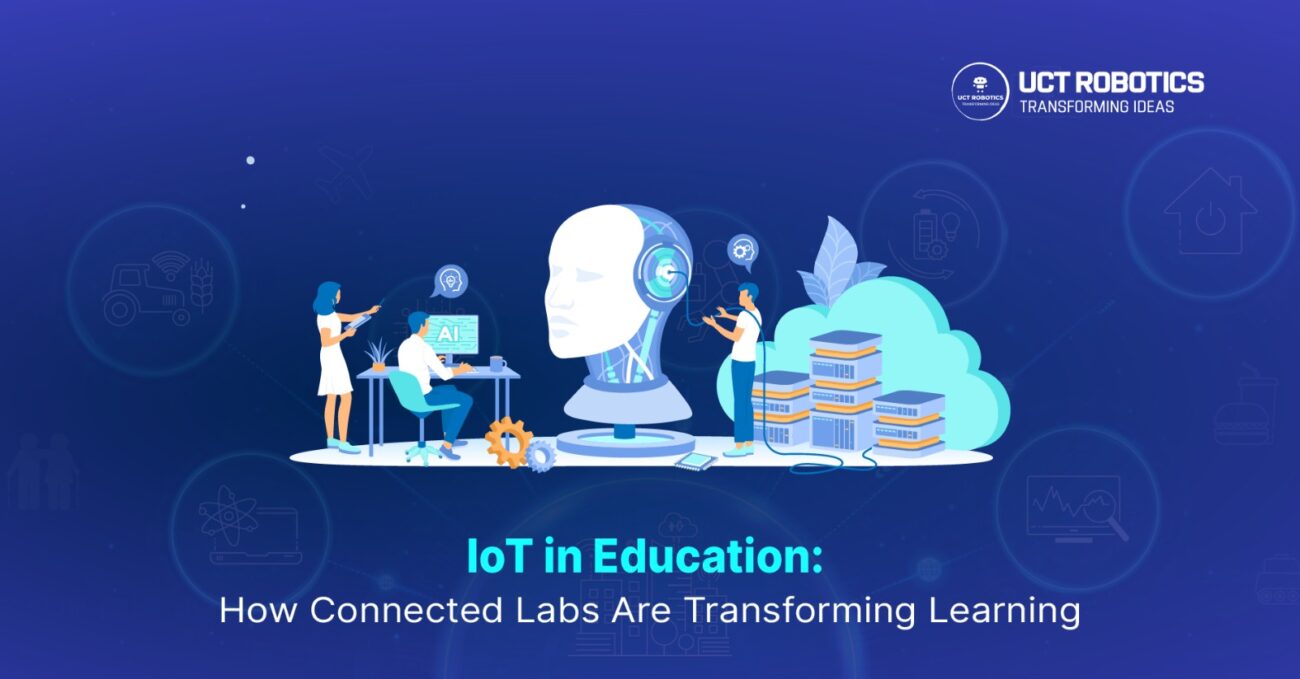
An IoT education lab is a dedicated learning space equipped with internet-connected devices, sensors, and software. These labs allow students to design, build, and interact with IoT systems. Unlike a traditional computer lab focused on software skills or a science lab for manual experiments, an IoT lab merges the physical and digital worlds.
Here, students don’t just read about smart technology; they create it. They learn to connect sensors that gather data (like temperature or motion), use microcontrollers to process that information, and write code to make devices act on it. These smart lab solutions for schools provide a sandbox for innovation, where students can develop projects that sense and respond to their environment.
Key Components of an IoT Lab Setup
Building a functional IoT lab requires a thoughtful combination of hardware and software. While setups can vary based on budget and educational goals, a few core components are essential. A successful IoT lab setup integrates these elements to create a cohesive and powerful learning ecosystem.
| Component Category | Examples | Purpose in the Lab |
| Hardware | Arduino, Raspberry Pi, ESP32 | These are the “brains” of an IoT project, processing data and running code. |
| Sensors & Actuators | Temperature, humidity, light, motion sensors; Motors, LEDs, relays | Sensors gather data from the environment. Actuators perform physical actions based on that data. |
| Connectivity | Wi-Fi Modules, Bluetooth, LoRaWAN | These components enable devices to communicate with each other and the internet. |
| Cloud Platforms | AWS IoT, Google Cloud IoT, ThingSpeak | Cloud services store, process, and visualize the vast amounts of data collected by IoT devices. |
| Development Tools | Arduino IDE, Python, visual block coding platforms | Software used to write, compile, and upload code to the microcontrollers. |
These components work together to form a complete project loop. For example, a temperature sensor collects data, a Raspberry Pi processes it, and an LED (actuator) turns red if the temperature exceeds a certain threshold, all while sending the data to a cloud dashboard for real-time monitoring.
Examples of IoT Devices in Classrooms
The true power of IoT comes to life through its applications. Integrating IoT devices in classrooms and labs makes abstract concepts tangible and relevant. Students can work on projects that directly address challenges in their school or community.
Here are a few practical examples:
- Smart Agriculture System: Students can build a system that monitors soil moisture, temperature, and light levels in a school garden. The system can automatically water the plants when the soil is dry, sending alerts to a student’s phone. This project teaches electronics, programming, and biology all at once.
- Classroom Environment Monitor: An IoT device can be built to track air quality (CO2 levels), noise, and temperature in the classroom. The data can be displayed on a dashboard, helping students understand environmental science and the importance of a healthy learning space.
- Energy Consumption Tracker: Students can attach smart plugs and sensors to appliances around the school to monitor energy usage. This data helps them identify waste and propose solutions for energy conservation, combining engineering with environmental stewardship.
- Automated Lab Assistants: In chemistry or physics labs, IoT devices can monitor and log data from long-running experiments, freeing up class time for analysis and discussion rather than manual data collection.
Benefits of Smart Lab solutions for Schools
Adopting smart lab solutions for schools offers profound benefits that extend beyond the lab itself, impacting students, teachers, and the institution as a whole.
- Fosters Hands-On Learning: IoT labs move education from passive listening to active creating. Students learn by doing, which enhances retention and deepens their understanding of complex STEM concepts.
- Develops In-Demand Skills: The job market increasingly requires skills in programming, data analysis, and hardware integration. IoT labs directly equip students with the technical and problem-solving abilities needed for future careers.
- Promotes Interdisciplinary Education: IoT projects are naturally interdisciplinary. A smart gardening project, for instance, involves biology, electronics, computer science, and data analysis. This approach breaks down subject silos and shows students how different fields connect.
- Boosts Student Engagement: Building a device that solves a real problem is far more engaging than a textbook chapter. The tangible outcomes of IoT projects give students a sense of accomplishment and purpose, increasing their motivation to learn.
- Encourages Critical Thinking and Problem-Solving: When a project doesn’t work, students must troubleshoot. Is it a coding bug? A wiring mistake? A sensor issue? This process builds resilience and hones their analytical and problem-solving skills.
Steps to Set Up an IoT Lab in Educational Institutions
Creating an effective IoT in education lab requires careful planning. It’s more than just buying equipment; it involves creating a supportive ecosystem for learning.
- Define Learning Objectives: Start by asking what you want students to learn. Are you focusing on basic coding, electronics, data science, or all of the above? Your goals will determine the equipment and curriculum you need.
- Start Small and Scale: You don’t need a massive budget to begin. Start with a few basic kits, like Arduino or Raspberry Pi starter packs. As teachers and students become more comfortable, you can expand your inventory with more advanced sensors and devices.
- Choose the Right Hardware and Software: Select user-friendly hardware and software that align with your students’ age and skill level. Visual block-based coding platforms are great for beginners, while text-based languages like Python and C++ are better for advanced students.
- Prioritize Teacher Training: The most crucial component is a confident teacher. Provide educators with professional development opportunities to learn the technology and develop curriculum ideas. Empowered teachers are the key to a successful lab.
- Ensure Network and Safety Infrastructure: IoT devices need reliable internet access. Ensure your school’s network can support the additional devices. Also, establish clear safety protocols for handling electronic components and tools.
- Develop a Project-Based Curriculum: Design projects that are both educational and exciting. Start with guided projects and gradually move toward open-ended challenges where students can define their own problems to solve.
Integrating IoT Labs with Curriculum and Learning Outcomes
For an IoT lab to be truly effective, it must be woven into the existing curriculum, not treated as a separate, isolated activity. The goal is to use IoT as a tool to achieve and enhance existing learning outcomes.
For example, in a science class studying climate, students can build weather stations to collect and analyze local weather data, comparing it to broader climate models. In a math class, data from an IoT energy monitor can be used to teach statistics, graphing, and data analysis.
By linking projects directly to curriculum standards, educators can ensure that IoT in education labs reinforce core academic concepts while also teaching valuable technical skills. This integration demonstrates the real-world application of classroom knowledge, answering the age-old student question: “When will I ever use this?”
Success Stories: Impact of IoT Labs on Student Engagement
Schools that have successfully implemented IoT labs report a dramatic increase in student engagement. At one high school, a group of students designed a smart alert system for their campus. The system used motion sensors and a custom app to notify security of unauthorized access to certain areas after hours. The project not only won a regional science fair but also gave the students invaluable experience in project management, coding, and collaborative problem-solving.
In another case, a middle school used IoT devices in classrooms to create an “escape room” challenge. Students had to solve puzzles by coding sensors and actuators to unlock boxes and reveal clues. The activity transformed a standard coding lesson into an exciting and memorable team-based adventure. These stories show that when students are given the tools to innovate, they become more invested, more curious, and more confident in their abilities.
Challenges in Implementing IoT in Education Labs
Despite the benefits, setting up IoT in education labs comes with challenges.
- Cost: The initial investment in hardware can be a barrier for some schools. However, starting with affordable kits and seeking grants can make it manageable.
- Teacher Training: Many educators may not feel equipped to teach IoT concepts. Continuous professional development and a supportive community of practice are essential.
- Curriculum Integration: Finding the time and resources to integrate IoT into an already packed curriculum can be difficult. A phased approach and focusing on interdisciplinary projects can help.
- Technical and Security Issues: Managing a network of devices and ensuring data privacy and security requires technical expertise. Schools need a clear plan for IT support and cybersecurity.
Overcoming these hurdles requires a strategic, top-down commitment from school leadership. By viewing the IoT lab as a long-term investment in student preparedness, institutions can justify the resources needed for training, equipment, and support.
Future Directions: Evolving Trends in IoT-enabled Education
The field of IoT is constantly evolving, and its application in education will continue to grow. We can expect to see trends like the integration of Artificial Intelligence (AI) and Machine Learning (ML) with IoT. Students will not only collect data but also build systems that learn from it and make intelligent predictions.
Imagine a lab where an IoT system monitors plant health and uses ML to predict disease before it’s visible to the human eye. Furthermore, the rise of digital twins—virtual replicas of physical systems—will allow students to simulate and test their IoT projects in a risk-free virtual environment before building them physically. These advancements will make smart lab solutions for schools even more powerful.
Conclusion: Unlocking the Potential of IoT in Education Labs
The integration of IoT in education labs is more than just a technological upgrade; it is a pedagogical revolution. It transforms learning into an active, creative, and collaborative process that prepares students for the complexities of a connected world. By providing hands-on experience with designing, building, and troubleshooting smart systems, these labs cultivate the critical thinking, technical prowess, and innovative spirit that students need to thrive.
While challenges exist, the immense potential to boost engagement and teach essential future-ready skills makes the journey worthwhile. As we continue to unlock the power of connected devices, we give our students the tools to not just understand the future, but to build it.