Drivers of the Future of Robotics
The rapid evolution in robotics is not happening in a vacuum. It is being propelled by a convergence of powerful technological advancements that are making robots smarter, more capable, and more accessible than ever before. These key drivers form the foundation upon which the future of robotics is being built.
Advanced AI and Machine Learning Integration
The single most significant driver of modern robotics innovation is the integration of artificial intelligence (AI) and machine learning (ML). Early robots were programmed for repetitive, fixed tasks. Today, AI and ML give robots the ability to learn, reason, and adapt to their environment. This means a robot can recognize objects, make decisions in real-time, and improve its performance over time without human intervention. This cognitive leap is what separates a simple robotic arm from an intelligent system capable of complex problem-solving. This deep integration is a central theme in current robotics technology trends.
Connectivity, Data, and Flexible Designs
Modern robots are data-gathering powerhouses. Equipped with sophisticated sensors, they collect vast amounts of information about their operations and surroundings. Thanks to advancements in 5G and the Internet of Things (IoT), this data can be transmitted and analyzed instantly. This constant flow of information allows for real-time monitoring, predictive maintenance, and process optimization. Furthermore, hardware designs have become more flexible and modular. Instead of rigid, single-purpose machines, we are seeing adaptable platforms that can be reconfigured for different tasks, making robotics innovation more cost-effective and versatile.
Human-Robot Collaboration and Cobots
One of the most transformative shifts in robotics is the move from replacing human workers to augmenting them. Collaborative robots, or “cobots,” are designed to work safely alongside people, sharing a workspace and combining human ingenuity with robotic precision and strength. Cobots handle the repetitive, strenuous, or dangerous aspects of a task, freeing up human workers to focus on more complex, value-added activities like quality control, problem-solving, and innovation. This symbiotic relationship is a critical component shaping the future of robotics, making automation more accessible, especially for small and medium-sized enterprises (SMEs).
Emerging Robotics Technology Trends
The field of robotics is buzzing with groundbreaking developments. These emerging robotics technology trends are pushing the boundaries of what’s possible and providing a glimpse into a future where robots are seamlessly integrated into every facet of our lives.
AI-Powered Autonomy, Soft Robotics, and Swarm Robotics
- AI-Powered Autonomy: This is the next level of robotics intelligence. Fully autonomous robots can navigate and operate in unstructured, dynamic environments without any human guidance. Think of self-driving cars navigating city streets or agricultural robots tending to crops based on real-time sensor data. This trend is vital for the future of robotics in logistics, exploration, and public services.
- Soft Robotics: Inspired by biological organisms like octopuses and caterpillars, soft robots are made from flexible, compliant materials. This allows them to handle delicate objects (like fruit or medical supplies) without causing damage and to navigate complex, tight spaces where rigid robots cannot go. This robotics innovation is set to revolutionize healthcare and food production.
- Swarm Robotics: This concept involves deploying large groups of simple, coordinated robots that work together to accomplish a task that would be impossible for a single robot. Drawing inspiration from ant colonies or schools of fish, swarm robotics can be applied to large-scale environmental monitoring, search and rescue operations, and precision agriculture.
Micro/Nanorobots and Humanoid Robots
The scale of robotics is expanding in both directions. At one end, micro and nanorobots are being developed for highly targeted medical treatments, such as delivering drugs directly to cancer cells or performing microsurgery from inside the body. At the other end, humanoid robots are becoming more sophisticated. While still largely in development, their potential to operate in human-designed environments—from disaster zones to manufacturing plants—makes them a significant area of robotics innovation.
Cloud Robotics and Robotics-as-a-Service (RaaS)
- Cloud Robotics: This approach outsources the “brain” of a robot to the cloud. Instead of relying solely on onboard processors, robots can tap into the immense computational power and data storage of cloud servers. This allows them to access vast libraries of information, learn from the experiences of other connected robots, and perform complex AI calculations without needing expensive onboard hardware.
- Robotics-as-a-Service (RaaS): RaaS is a business model that lowers the barrier to entry for automation. Companies can lease robotic hardware and cloud-based software on a subscription basis, avoiding a massive upfront capital investment. This makes advanced robotics technology trends accessible to SMEs and allows businesses to scale their automation efforts based on demand.
Digital Twin Technology in Robotics Innovation
A significant content gap in many discussions about the future of robotics is the role of digital twin technology. A digital twin is a virtual replica of a physical robot or an entire automated system. This virtual model is fed real-time data from its physical counterpart, allowing operators to simulate, test, and optimize processes in a risk-free digital environment.
Before deploying a new robotic system on a factory floor, engineers can use a digital twin to:
- Simulate workflows to identify bottlenecks.
- Test new software updates without disrupting operations.
- Train the robot’s AI on millions of scenarios in a fraction of the time it would take in the real world.
- Predict maintenance needs before a physical breakdown occurs.
This robotics innovation dramatically accelerates development cycles, reduces costs, and improves the long-term performance and reliability of robotic systems.
Distributed Intelligence and Self-Replicating Systems
Looking further into the future of robotics, concepts like distributed intelligence and self-replicating systems are moving from theory to early application. Distributed intelligence is an extension of swarm robotics where decision-making is decentralized across the entire network of robots, creating a resilient and highly adaptive system. Self-replicating systems, while still in the nascent stages, explore the potential for robots to build and repair other robots, a concept that could revolutionize manufacturing and space exploration by creating self-sustaining industrial ecosystems.
Industry Impact and Real-World Applications
The theoretical advancements in robotics are translating into tangible, transformative impacts across numerous industries. These real-world applications demonstrate why robotics is not just a future concept but a present-day reality reshaping our world.
Healthcare: A New Era of Precision and Care
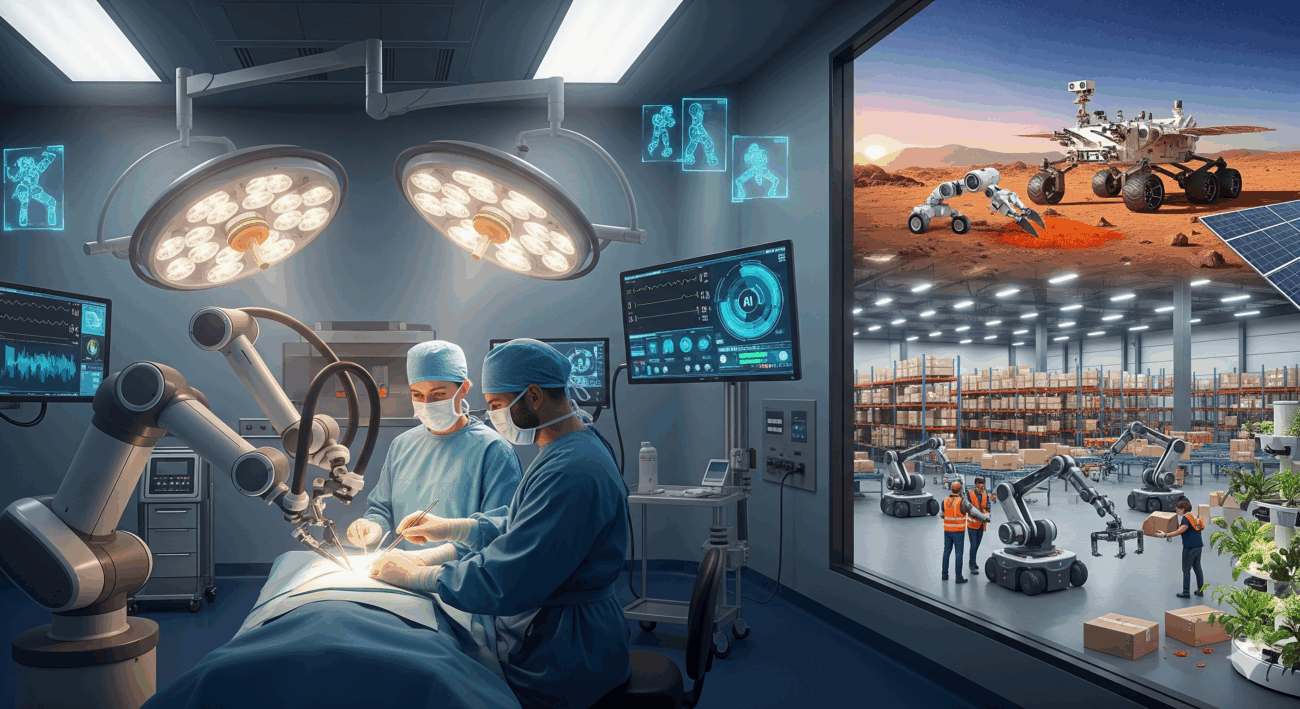
The healthcare sector is a prime example of beneficial robotics innovation. Robots are enhancing surgical precision, improving patient care, and expanding access to medical expertise.
| Application Area | Robotic Solution | Impact |
|---|---|---|
| Surgery | Surgical assistant robots (e.g., da Vinci) | Minimally invasive procedures, reduced scarring, faster recovery. |
| Patient Care | Robotic exoskeletons, patient lifting assistants | Mobility assistance for paralyzed patients, reduced caregiver injuries. |
| Telemedicine | Telepresence robots | Remote consultations with specialists, connecting rural patients. |
| Logistics | Pharmacy and lab automation robots | Automated dispensing of medication, sorting of samples, reducing error. |
Manufacturing/Logistics: The Smart Factory Realized
Manufacturing and logistics have long been pioneers in robotics, but modern robotics technology trends are creating truly intelligent, flexible, and efficient operations.
- Automation and Cobots: Cobots are now common on assembly lines, working with humans on tasks requiring both dexterity and strength. This human-robot collaboration enhances productivity and improves workplace ergonomics.
- Mobile Manipulators: A key content gap often overlooked is the rise of autonomous mobile manipulators. These are robots that combine the mobility of an Autonomous Mobile Robot (AMR) with the dexterity of a robotic arm. They can navigate a warehouse, pick an item from a shelf, and transport it to a packing station, all autonomously. This is a critical piece of robotics innovation for end-to-end fulfillment.
- Warehouse Automation: Fleets of AMRs are orchestrating the complex dance of sorting and transporting goods in massive distribution centers, enabling the rapid delivery speeds consumers now expect.
Space Exploration: The Final Frontier for Autonomy
Robots are humanity’s envoys to the cosmos. In the harsh and unforgiving environments of space, robotics is not just a convenience—it is a necessity. From the rovers exploring the surface of Mars to the robotic arms building and maintaining the International Space Station, robotics enables missions that would be too dangerous or impossible for humans. The future of robotics in space focuses on increasing autonomy, allowing spacecraft and rovers to make critical decisions independently and adapt to unforeseen challenges in deep space, where communication delays make real-time human control impractical.
Sustainability: Robotics for a Greener Planet
An often-understated benefit of robotics innovation is its potential contribution to environmental sustainability. This is a crucial content gap in many discussions.
- Eco-Friendly Materials: Researchers are developing robots made from biodegradable and recyclable materials to reduce electronic waste.
- Energy Optimization: AI-powered robots in manufacturing and logistics can optimize their movements and operational speeds to minimize energy consumption. Precision agriculture robots reduce the use of pesticides and water by targeting only the areas that need it.
- Green Practices: Robots are being deployed for tasks like sorting waste for recycling, cleaning up oil spills, and monitoring endangered species in remote habitats, directly contributing to environmental protection efforts.
Guidance for SMEs: Making Robotics Accessible
For small and medium-sized enterprises (SMEs), the idea of implementing robotics can be daunting. However, modern robotics technology trends are making it more feasible.
- Modularity and Custom Solutions: Instead of a one-size-fits-all approach, SMEs can invest in modular robotic components that solve a specific problem. A simple cobot for a pick-and-place task can provide a significant return on investment without requiring a complete factory overhaul.
- Real Adoption Examples: Companies can look to real-world examples in their industry. A small machine shop using a cobot to tend a CNC machine overnight, or a local bakery using a robotic arm for decorating cakes, demonstrates that the future of robotics includes businesses of all sizes. The RaaS model is particularly beneficial here, allowing SMEs to test and scale automation with minimal risk.
Advantages and Opportunities
The widespread adoption of robotics unlocks a host of powerful advantages and creates new economic and social opportunities. Embracing this robotics innovation is becoming essential for maintaining a competitive edge.
| Advantage/Opportunity | Description |
|---|---|
| Productivity & Efficiency | Robots can operate 24/7 without fatigue, performing tasks with a level of speed and consistency that is unattainable for humans. |
| Improved Safety & Quality | Robots can take over dangerous, dirty, and dull jobs, reducing workplace accidents. Their precision also leads to higher-quality products. |
| Job Creation & New Roles | While some jobs are automated, new roles are created in robotics design, programming, maintenance, and system management. |
| Economic Impact | Robotics drives economic growth by creating more efficient industries, enabling new business models (like RaaS), and fostering innovation. |
| Solving Grand Challenges | Robotics provides tools to tackle major global issues, from sustainable farming and environmental cleanup to advanced medical care. |
Challenges and Considerations
Despite the immense potential, the path to a robotics-driven future is not without its challenges. Addressing these issues proactively is essential for a smooth and equitable transition.
- Workforce Transformation: The most significant challenge is the impact on the human workforce. Automation will displace certain jobs, creating an urgent need for upskilling and reskilling programs to prepare workers for the new roles that will emerge alongside robotics innovation.
- Security, Privacy, and Ethics: As robots become more connected and autonomous, they become potential targets for cyberattacks. The data they collect also raises significant privacy concerns. Furthermore, ethical frameworks are needed to govern the decision-making of autonomous systems, especially in critical situations.
- Financial Costs and ROI: The initial investment for robotic systems can be substantial, and calculating a clear return on investment (ROI) can be complex, particularly for SMEs.
- Regulatory and Social Acceptance: Governments need to create clear regulations for the safe deployment of robots, especially in public spaces. Overcoming public fear and ensuring social acceptance of increasingly intelligent machines is another critical hurdle for the future of robotics.
Preparing for a Robotics-Driven Future
Navigating the transition to a world more deeply integrated with robotics requires a concerted effort from all sectors of society. Preparation is key to maximizing the benefits while mitigating the risks.
Education and Workforce Development
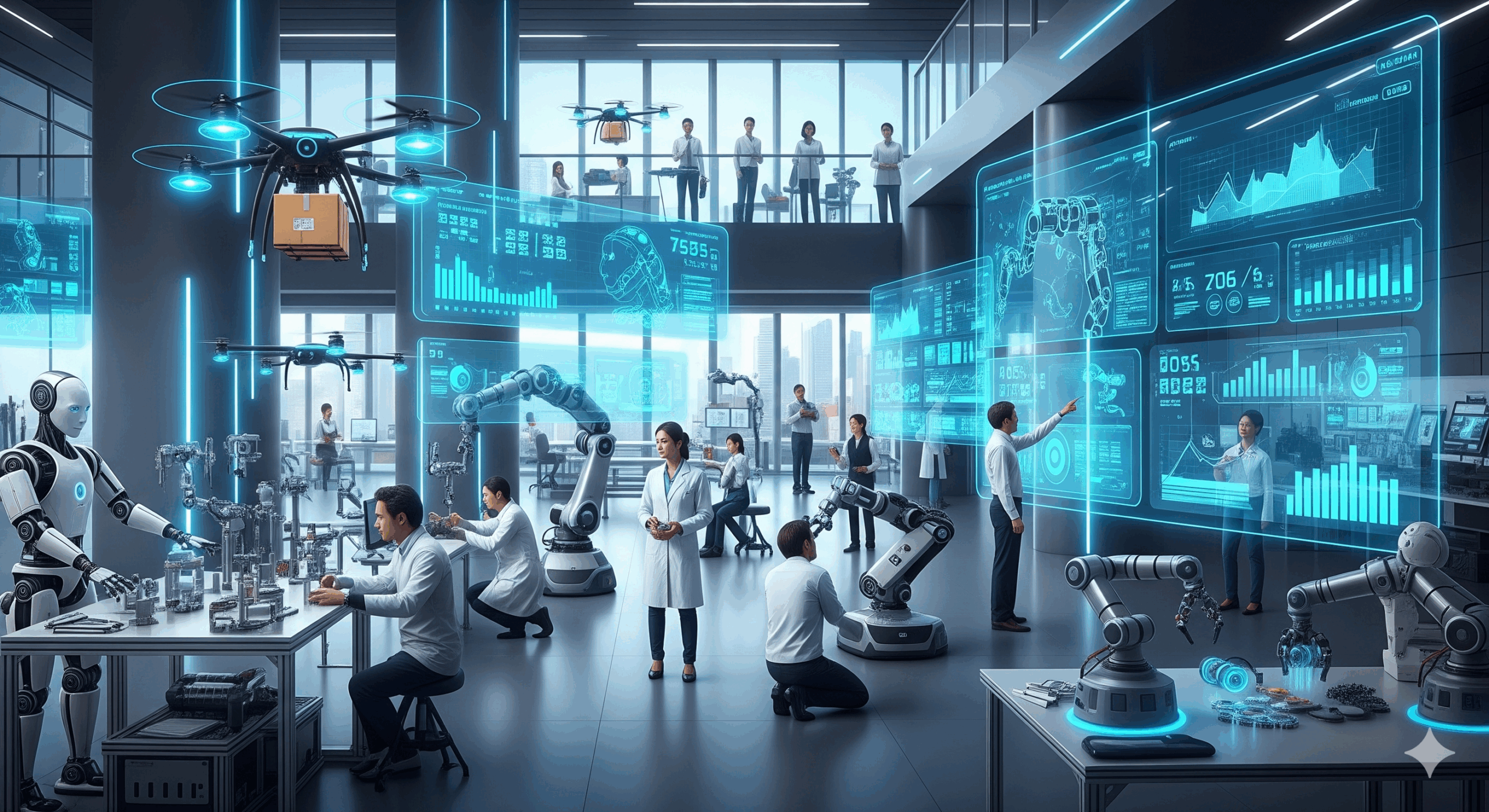
The education system must adapt to prepare the next generation for a future where working with robots is the norm. This means a greater emphasis on STEM (Science, Technology, Engineering, and Mathematics) education from an early age. For the current workforce, governments and companies must invest heavily in lifelong learning, vocational training, and reskilling programs focused on robotics programming, maintenance, and data analysis.
Collaboration Between Stakeholders
No single entity can navigate this transformation alone. A strong partnership between businesses, governments, and academic institutions is essential. Businesses can identify industry needs, universities can drive foundational research and robotics innovation, and governments can provide funding and create supportive policies. This collaborative ecosystem will accelerate the development and responsible adoption of new robotics technology trends.
Regulatory Frameworks for Responsible Innovation
To build public trust and ensure safety, clear and adaptable regulatory frameworks are necessary. These regulations should address key areas such as data privacy, cybersecurity standards for connected robots, and liability protocols for autonomous systems. The goal is not to stifle robotics innovation but to guide it in a direction that is safe, ethical, and beneficial for society as a whole.
Conclusion: Embracing the Robotics Revolution
The evidence is clear: robotics is not just a branch of technology; it is the engine driving the future. From the intricate dance of surgical robots in operating rooms to the tireless work of autonomous systems in our factories and beyond, the impact of robotics is profound and pervasive. The continuous advancements in AI, the rise of collaborative robots, and innovative business models like RaaS are making this powerful technology more accessible and capable than ever before. The future of robotics promises a world of unprecedented efficiency, safety, and opportunity.
The journey ahead involves challenges, particularly in workforce transition and ethical governance. However, by investing in education, fostering collaboration, and building thoughtful regulations, we can navigate these hurdles successfully. The robotics revolution is here. The time to prepare for it, participate in it, and help shape its direction is now. Embracing this transformative wave of robotics innovation is essential for any individual or organization looking to thrive in the technological landscape of tomorrow.