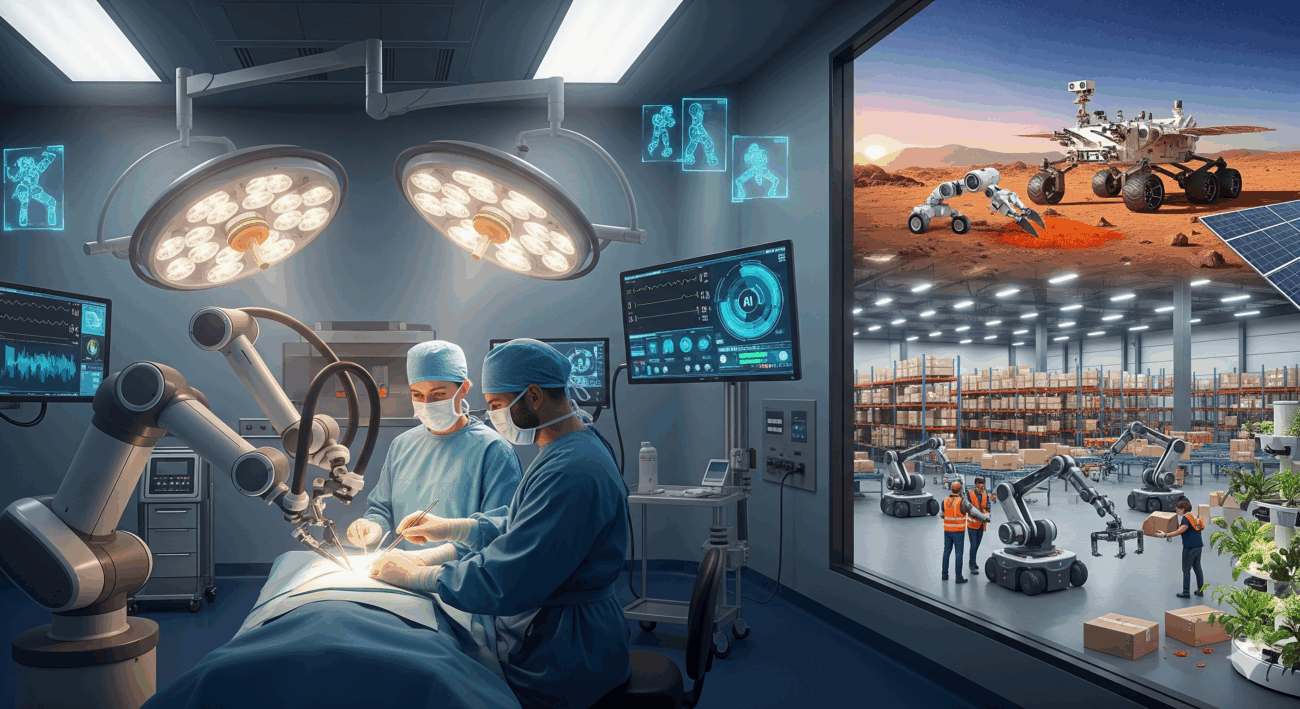
Why Pursue AI and Robotics Courses?
AI and robotics courses are your ticket to thriving in a tech-driven world. The demand for robotics engineers and AI specialists is soaring, with job growth projected at 3.3% annually through 2032, creating over 182,000 new roles. Salaries are impressive: entry-level robotics technicians earn around $62,000, while experienced engineers can make $87,000 to $150,000, depending on specialization.
These robotics courses teach critical skills. Automation lets you design systems to streamline manufacturing or logistics. Machine learning algorithms enable robots to adapt, like recognizing objects or predicting equipment failures. IoT connects devices for real-time communication, and embedded systems power robots’ “brains” with microcontrollers. You’ll prepare for roles like robotics engineer, automation specialist, or IoT developer in industries like healthcare, automotive, and agriculture—think surgical robots or autonomous farming equipment.
With hands-on robotics experience and certifications from reputable programs, you’ll stand out in a competitive job market. Whether switching careers or upskilling, AI and robotics courses blend innovation and practicality to set you up for success.
Criteria for Selecting the Top Courses

Picking the right robotics course means aligning it with your goals. We evaluated courses based on key factors to ensure value. Curriculum depth is critical: does it cover automation, machine learning algorithms, IoT, and embedded systems? We prioritized programs balancing theory with practical projects.
Instructor expertise matters—courses led by industry veterans or academics from top institutions ensure quality. Accessibility is key: free or low-cost options for beginners, flexible pacing for professionals, and mobile-friendly platforms. Certifications add weight; a credential from a recognized platform boosts your resume.
Hands-on robotics experience, like projects using Robot Operating System (ROS) or Arduino, was a must. Integration of artificial intelligence courses within robotics ensures you learn AI-driven autonomy. We also checked user reviews and completion rates to filter out weak options. These criteria shaped a list of robotics courses that transform you into a career-ready expert.
Top AI and Robotics Courses for Beginners
New to robotics? Beginner-friendly AI and robotics courses build confidence with core concepts like automation and machine learning algorithms. Here’s a curated list offering hands-on robotics experience to kickstart your journey.
Coursera’s “Robotics: Aerial Robotics” (University of Pennsylvania) explores drone technology, teaching automation and sensor integration. Duration: 4 weeks, 4-6 hours weekly. Cost: Free to audit, $49 for certification. Pros: Real-world examples, interactive quizzes; cons: Requires basic math.
edX’s “Introduction to Robotics” (University of Queensland) covers embedded systems and IoT basics. You’ll learn machine learning algorithms for robot navigation. Duration: 6 weeks, self-paced. Cost: Free, $199 for a certificate. Pros: Engaging videos, active forums; cons: Limited advanced coding.
Udemy’s “Robotics for Beginners” emphasizes hands-on robotics experience with Arduino kits, covering automation scripts and simple IoT setups. Duration: 10 hours on-demand. Cost: $10-20 on sale. Pros: Lifetime access; cons: Variable instructor quality.
Class Central’s “Modern Robotics” (Northwestern University) introduces kinematics and dynamics. Duration: 6 courses, 20-30 hours total. Cost: Free. Pros: Comprehensive; cons: More theoretical.
| Course Name | Platform | Duration | Cost | Key Topics | Pros/Cons |
| Robotics: Aerial Robotics | Coursera | 4 weeks | Free audit/$49 cert | Automation, sensors | Pros: Practical; Cons: Math-heavy |
| Introduction to Robotics | edX | 6 weeks | Free/$199 cert | Embedded systems, IoT | Pros: Interactive; Cons: Basic coding |
| Robotics for Beginners | Udemy | 10 hours | $10-20 | Hands-on Arduino, automation | Pros: Affordable; Cons: Self-paced only |
| Modern Robotics | Class Central | 20-30 hours | Free | Kinematics, machine learning algorithms | Pros: In-depth; Cons: Theoretical |
These robotics courses lay a solid foundation, blending theory with practice to spark your passion for AI and robotics.
Advanced Courses for Career Advancement
Ready to level up? Advanced AI and robotics courses dive deeper into machine learning algorithms, IoT, and embedded systems, preparing you for specialized roles. These often require programming or math knowledge.
NVIDIA’s “Robotics Fundamentals Learning Path” covers simulation tools and ROS for autonomous systems. Duration: Self-paced, 10-15 hours. Cost: Free. Pros: Cutting-edge AI focus; cons: Needs GPU access.
The Construct’s “ROS Developer Learning Path” offers hands-on robotics experience in navigation and manipulation. Duration: 6-8 weeks. Cost: $99/month subscription. Pros: Real robot simulations; cons: Subscription-based.
Michigan’s Online Robotics Courses (via GitHub) provide advanced embedded systems training, covering control theory and machine learning algorithms. Duration: Varies, free access. Pros: University-level; cons: Self-directed.
Carnegie Mellon’s Robotics Academy Certifications focus on VEX and LEGO for practical automation. Duration: Live sessions, 20 hours. Cost: $200-500. Pros: Certification; cons: Scheduled classes.
These robotics courses align with high-demand roles like AI robotics specialist, with salaries up to $150,000.
Spotlight: UCT Robotics – A Unique Path to Career Success
UCT Robotics at the University of Cape Town shines as a premier choice for aspiring engineers. Unlike generic platforms, UCT’s programs, like the Bachelor of Science in Mechatronics, integrate electrical, mechanical, and computer engineering for comprehensive robotics training.
What makes UCT Robotics unique? Its African Robotics Unit emphasizes hands-on robotics experience, tackling regional challenges like sustainable agriculture robots or urban mobility systems. The curriculum spans automation, machine learning algorithms, IoT for connected devices, and embedded systems design—skills employers value globally.
Certifications are robust, with interdisciplinary projects building strong portfolios. Career support includes tech firm partnerships, helping graduates secure roles with competitive salaries. Compared to broad platforms like Coursera, UCT Robotics offers a tailored, region-focused approach, ideal for those seeking cultural relevance in their robotics course. Tuition varies, but scholarships make it accessible, positioning UCT as a gateway to AI and robotics innovation.
Free vs. Paid Robotics Courses: Which Is Right for You?

Choosing between free and paid robotics courses depends on your budget and goals. Free options, like NVIDIA’s learning path or Michigan’s open materials, offer flexibility and no cost, perfect for self-starters exploring artificial intelligence courses. They provide hands-on robotics experience via simulations but lack personalized feedback.
Paid courses, like Coursera’s or Udemy’s, deliver structured learning, instructor support, and certifications that enhance resumes. They boost employability, with certified professionals seeing better job prospects and salaries starting at $87,000. Costs range from $10 to $500, though.
| Aspect | Free Courses | Paid Courses |
| Cost | $0 | $10-$500+ |
| Examples | NVIDIA Fundamentals, Michigan GitHub | Coursera Specializations, Udemy ROS |
| Pros | Accessible, self-paced, covers IoT | Certifications, support, advanced projects |
| Cons | No credentials, less structure | Expense, time commitment |
| Career Impact | Good for basics | Higher employability, e.g., $87k+ salaries |
UCT Robotics balances affordability with university-level training, offering paid value with hands-on focus.
IoT and Embedded Systems in Robotics: Real-World Applications
IoT and embedded systems are the backbone of modern robotics. Embedded systems, like Arduino microcontrollers, handle sensor data and motor control. IoT enables robots to connect with networks for real-time monitoring and data sharing.
In practice, warehouse robots use embedded systems for navigation and IoT for inventory tracking, cutting errors by 30%. Healthcare bots apply machine learning algorithms via embedded chips for patient monitoring, with IoT enabling real-time alerts. UCT Robotics incorporates IoT in projects like environmental monitoring drones, blending theory with application.
Mastering these through a robotics course unlocks innovative solutions, though challenges like cybersecurity must be addressed.
Emerging Trends in Robotics: Future-Proof Your Skills
Robotics in 2025 is evolving with trends like AI-physical integration, humanoids, and sustainability. Generative AI enables adaptive robot behaviors, while humanoids tackle tasks requiring dexterity. Sustainable robotics focuses on energy-efficient designs, reducing manufacturing’s carbon footprint.
Ethical AI ensures responsible deployment. To stay ahead, explore these trends in robotics courses—NVIDIA covers AI advancements, while UCT Robotics emphasizes sustainable solutions for African contexts. Future-proofing means mastering swarm robotics and human-robot collaboration.
Essential Tools and Resources for Robotics Learning
A robotics course is incomplete without tools. ROS (Robot Operating System) is vital for simulation and control, supporting machine learning algorithms. Arduino boards enable affordable embedded systems prototyping for IoT projects.
Fusion 360 excels in CAD for robot design, while Gazebo simulates environments. Free tutorials on these tools enhance hands-on robotics experience. UCT Robotics integrates them into training, bridging theory and practice.
| Tool | Purpose | Cost | Best For |
| ROS | Simulation & control | Free | Advanced automation |
| Arduino | Prototyping embedded systems | $20-50 | Beginners’ IoT |
| Fusion 360 | CAD design | Free/Paid | Robot modeling |
| Gazebo | Virtual testing | Free | Hands-on projects |
Hands-On Projects to Build Your Portfolio
Hands-on projects solidify robotics course learning. Build an IoT-enabled robot using Arduino for environmental sensing, applying machine learning algorithms for data analysis. Or create a ROS-based autonomous vehicle for navigation challenges.
Examples include Carnegie Mellon’s Arduino manipulation projects or The Construct’s ROS simulations. These build portfolios showcasing automation and embedded systems skills, impressing employers.
Conclusion and Next Steps
AI and robotics courses equip you with automation, machine learning algorithms, IoT, and embedded systems skills for a thriving career. From beginner platforms to UCT Robotics’ hands-on mastery, options abound.
Start today—enroll in a robotics course like Coursera’s or explore UCT Robotics for specialized training. Share your journey in the comments, and let’s shape the future of AI and robotics together.